
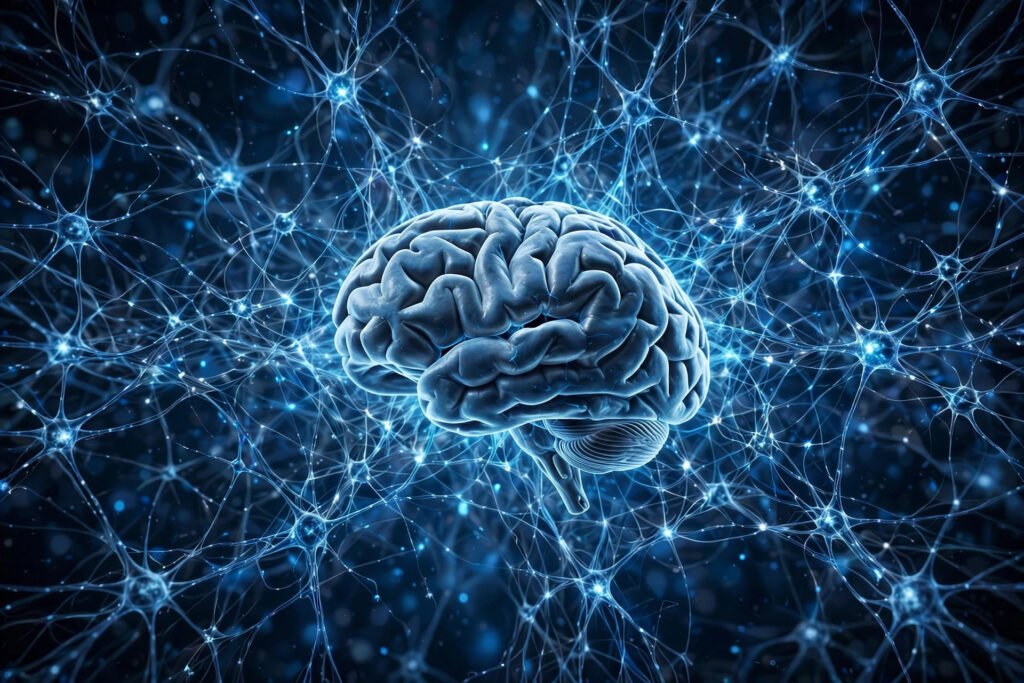
Every thought you think, every emotion you feel, and every decision you make begins in the brain — a three-pound organ containing roughly 86 billion neurons. Neuroscience, the study of the brain and nervous system, has revealed remarkable insights into how brain function relates to mental health, and patients in Texas are already benefiting from what scientists have learned.
Understanding the neuroscience behind mental health conditions can be empowering: it confirms that these are medical conditions rooted in biology — not personal failings — and it explains why treatments like therapy and medication actually work.
Your Brain on Stress
When you encounter a threat, your brain’s alarm system activates the fight-or-flight response: stress hormones surge, your heart races, and your body prepares for action. This response is lifesaving in genuine danger. But in anxiety disorders and PTSD, the alarm can trigger too easily or fail to switch off — leaving people in a prolonged state of high alert that exhausts both mind and body.
Key Brain Regions Involved in Mental Health
- The amygdala processes fear and emotional reactions. Research suggests it can become overactive in anxiety disorders and PTSD.
- The prefrontal cortex handles planning, decision-making, and impulse control. Differences in this region are associated with ADHD and difficulties with focus.
- The hippocampus is central to memory formation. Chronic stress and depression have been linked to changes here — changes that research suggests can improve with effective treatment.
- Reward circuits involving dopamine help drive motivation and pleasure; disruptions in these pathways are implicated in depression and addiction.
Neuroplasticity: Your Brain Can Change
Perhaps the most hopeful finding in modern neuroscience is neuroplasticity — the brain’s lifelong ability to rewire itself. Learning, therapy, exercise, and even medication appear to support the formation of new neural connections. This means the brain patterns underlying depression or anxiety are not fixed: with the right treatment, the brain can literally build healthier pathways. Recovery, in a real sense, is the brain healing itself with help.
What Neuroscience Means for Treatment
Neuroscience explains why effective treatments work the way they do: therapy helps retrain unhelpful response patterns, medications support the chemical environment the brain needs to function well, and lifestyle factors like sleep and exercise directly influence brain health. It also points to the future — researchers are exploring whether brain-based measures might one day help match patients to treatments more precisely. For now, the takeaway is practical: because mental health conditions have biological roots, they deserve and respond to medical care.
Frequently Asked Questions
Does a chemical imbalance mean my brain is damaged? No. Differences in brain chemistry or activity patterns are not damage — and research indicates many of these differences improve with effective treatment, thanks to neuroplasticity.
Can brain scans diagnose mental health conditions? Not currently in routine practice. Brain imaging is a powerful research tool, but diagnosis still relies on careful clinical evaluation of symptoms and history.
Understanding Leads to Healing
Knowing that mental health conditions are rooted in brain biology is often the first step toward seeking help without shame. Schedule a consultation with our Texas psychiatry practice to discuss neuroscience-informed care — in person or via secure telepsychiatry.
This article is for informational purposes only and is not a substitute for professional medical advice, diagnosis, or treatment. If you are in crisis, call or text 988 for immediate help.