
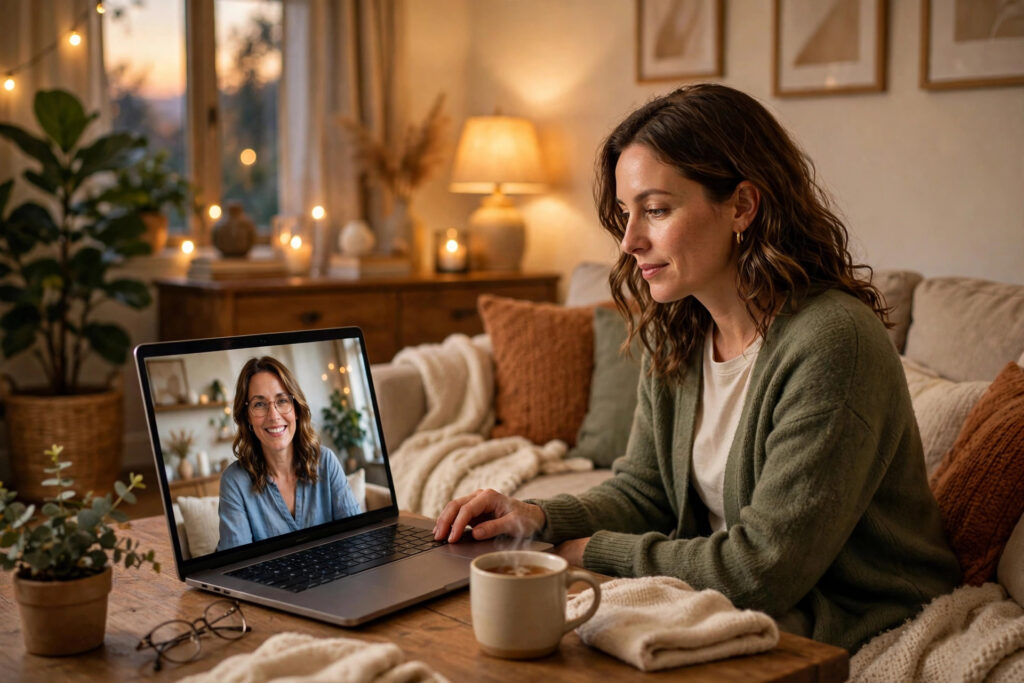
Telepsychiatry — psychiatric care delivered through secure video visits — has transformed access to mental health treatment across Texas. Patients from Dallas to El Paso, from busy professionals to parents in rural communities, can now meet with a licensed psychiatric provider without leaving home. If you’ve wondered whether virtual care is legitimate, effective, and right for you, this guide has answers.
Telepsychiatry isn’t a watered-down version of care. It’s the same professional evaluation, diagnosis, and treatment you’d receive in an office — delivered through encrypted video technology designed specifically for healthcare.
What Is Telepsychiatry?
Telepsychiatry is the practice of providing psychiatric evaluation, diagnosis, treatment planning, and medication management through real-time video conferencing. Using a HIPAA-compliant platform, you meet face-to-face with your provider from your home, office, or any private location. Sessions follow the same structure as in-person visits: discussion of symptoms and history, collaborative treatment decisions, and ongoing follow-up. In Texas, licensed providers can offer telepsychiatry to patients anywhere in the state, making specialist care accessible far beyond major cities.
Who Benefits Most from Telepsychiatry?
- Rural Texans: patients hours from the nearest psychiatrist gain access to specialist care
- Busy professionals and parents: no commute, no waiting room, no time off work needed
- People with anxiety or mobility challenges: receiving care from a comfortable, familiar environment
- Anyone valuing privacy: discreet appointments without being seen entering a clinic
- Patients needing consistent follow-up: easier scheduling means fewer missed appointments and steadier progress
What to Expect from a Telepsychiatry Visit
A first telepsychiatry appointment works much like an in-office evaluation. You’ll need a private, quiet space, a device with camera and microphone (phone, tablet, or computer), and a stable internet connection. Your provider will guide the conversation just as they would in person — asking about symptoms, history, and goals — and together you’ll develop a treatment plan. Follow-up visits are typically shorter check-ins to review progress and adjust treatment. Most patients find the experience feels natural within the first few minutes.
Is Telepsychiatry Effective?
Yes. A substantial body of research shows that telepsychiatry is effective for a wide range of conditions, including depression, anxiety disorders, ADHD, PTSD, and bipolar disorder — with patient satisfaction rates comparable to in-person care. For many people, the convenience of virtual visits actually improves outcomes, because consistent attendance matters enormously in mental health treatment, and telepsychiatry removes the logistical barriers that cause missed appointments. The key ingredient remains the same as in any care: a qualified provider and an honest, collaborative relationship.
Frequently Asked Questions
Is telepsychiatry private and secure? Yes. Legitimate telepsychiatry uses HIPAA-compliant, encrypted video platforms — not ordinary video chat apps. Your sessions are protected by the same confidentiality rules as in-person visits.
Can prescriptions be managed through telepsychiatry? In most cases, yes. Providers can evaluate, prescribe, and manage medications through virtual visits, following Texas regulations and federal guidelines for controlled substances.
Quality Care from the Comfort of Home
Distance shouldn’t determine the quality of your mental health care. Schedule a consultation with our Texas psychiatry practice and discover how convenient, effective telepsychiatry can fit into your life.
This article is for informational purposes only and is not a substitute for professional medical advice, diagnosis, or treatment. If you are in crisis, call or text 988 for immediate help.